
Soban, Window
& Satellite
Medium
Vellum
paper
Room 4


Rose Park
Website
rosepark.me
Contact
se.rosepark@gmail.com
SOcial
Artist Statement
Growing up between different countries and cultures, and now living across the States and Korea, the idea of “home” has always been difficult for me to define. Through short stays and repeated relocations, I began to question whether home could exist as a fixed place, which became the foundation of my art. My work reflects the experience of belonging to multiple places at once, understanding home as a state shaped by accumulated emotions and experiences. By translating this incomplete nature of home into familiar materials, I frame movement not as instability, but as a process of growth and expansion.
Description
<Soban> begins with the artist’s experience of repeated relocation and the moving boxes. These boxes, originally made for temporary use and moving, are transformed into soban—a traditional Korean dining table. In Korean culture, family is described as sikgu, meaning “those who eat together.” The dining table thus becomes a site where care, warmth, and memory are shared. By making a table out of moving boxes, the artist shows that the heart of a home can be built anywhere. Through this transformation, <Soban> reframes home not as a fixed location or permanent structure, but as something shaped through relationships and lived experience. Home, the artist shows us, can be carried, rebuilt, and redefined wherever one goes.
<Window> is a work composed of layered prints depicting landscapes from places the artist has lived. Scenes from different spaces and moments in time are stacked in multiple layers, merging into a single image through overlapping structures and shifting perspectives. This convergence reflects the processes through which the artist’s current self has been formed. The window frame placed atop the layers is not merely a structure for looking outward, but a metaphor for the way the world is perceived through accumulated experiences and memories. Through continual moving and the layering of places, <Window> suggests that spaces do not disappear as we leave them behind; instead, they gather, remain, and slowly form a way of seeing—becoming, in time, a place to call home.
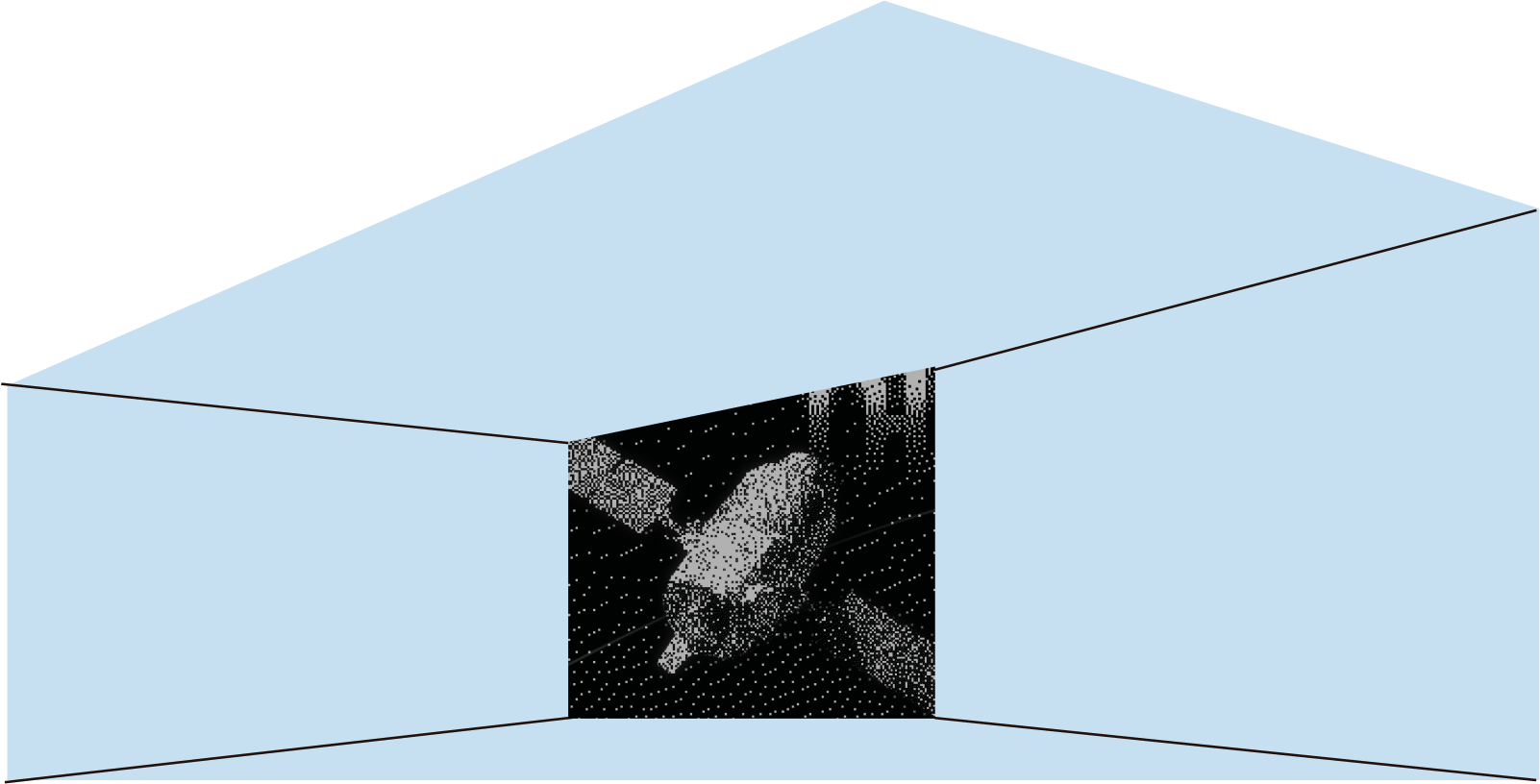
<Satellite> starts with a simple idea: “Perhaps we’re all satellites, searching for our own orbit.” Satellites are usually expected to stay in stable, fixed paths, and those that leave their orbit are often seen as failures. This work challenges that idea by comparing such satellites to people who step away from what is considered normal and create new paths for themselves. Although drifting and choosing an unfamiliar route can be risky, it can also lead to new kinds of success. Existing beyond fixed structures and expectations, <Satellite> proposes drifting not as failure, but as a way of navigating the world.

February
6th & 7th
616 E 9th St
NY, NY 10009


Soban, Window
& Satellite
Medium
CARDBOARD, MIXED MEDIA, AND POSTER
Room 4
Rose Park
Website
rosepark.me
Contact
se.rosepark@gmail.com
SOcial
Artist
Statement
Growing up between different countries and cultures, and now living across the States and Korea, the idea of “home” has always been difficult for me to define. Through short stays and repeated relocations, I began to question whether home could exist as a fixed place, which became the foundation of my art. My work reflects the experience of belonging to multiple places at once, understanding home as a state shaped by accumulated emotions and experiences. By translating this incomplete nature of home into familiar materials, I frame movement not as instability, but as a process of growth and expansion.
Description
<Soban> begins with the artist’s experience of repeated relocation and the moving boxes. These boxes, originally made for temporary use and moving, are transformed into soban—a traditional Korean dining table. In Korean culture, family is described as sikgu, meaning “those who eat together.” The dining table thus becomes a site where care, warmth, and memory are shared. By making a table out of moving boxes, the artist shows that the heart of a home can be built anywhere. Through this transformation, <Soban> reframes home not as a fixed location or permanent structure, but as something shaped through relationships and lived experience. Home, the artist shows us, can be carried, rebuilt, and redefined wherever one goes.
<Window> is a work composed of layered prints depicting landscapes from places the artist has lived. Scenes from different spaces and moments in time are stacked in multiple layers, merging into a single image through overlapping structures and shifting perspectives. This convergence reflects the processes through which the artist’s current self has been formed. The window frame placed atop the layers is not merely a structure for looking outward, but a metaphor for the way the world is perceived through accumulated experiences and memories. Through continual moving and the layering of places, <Window> suggests that spaces do not disappear as we leave them behind; instead, they gather, remain, and slowly form a way of seeing—becoming, in time, a place to call home.
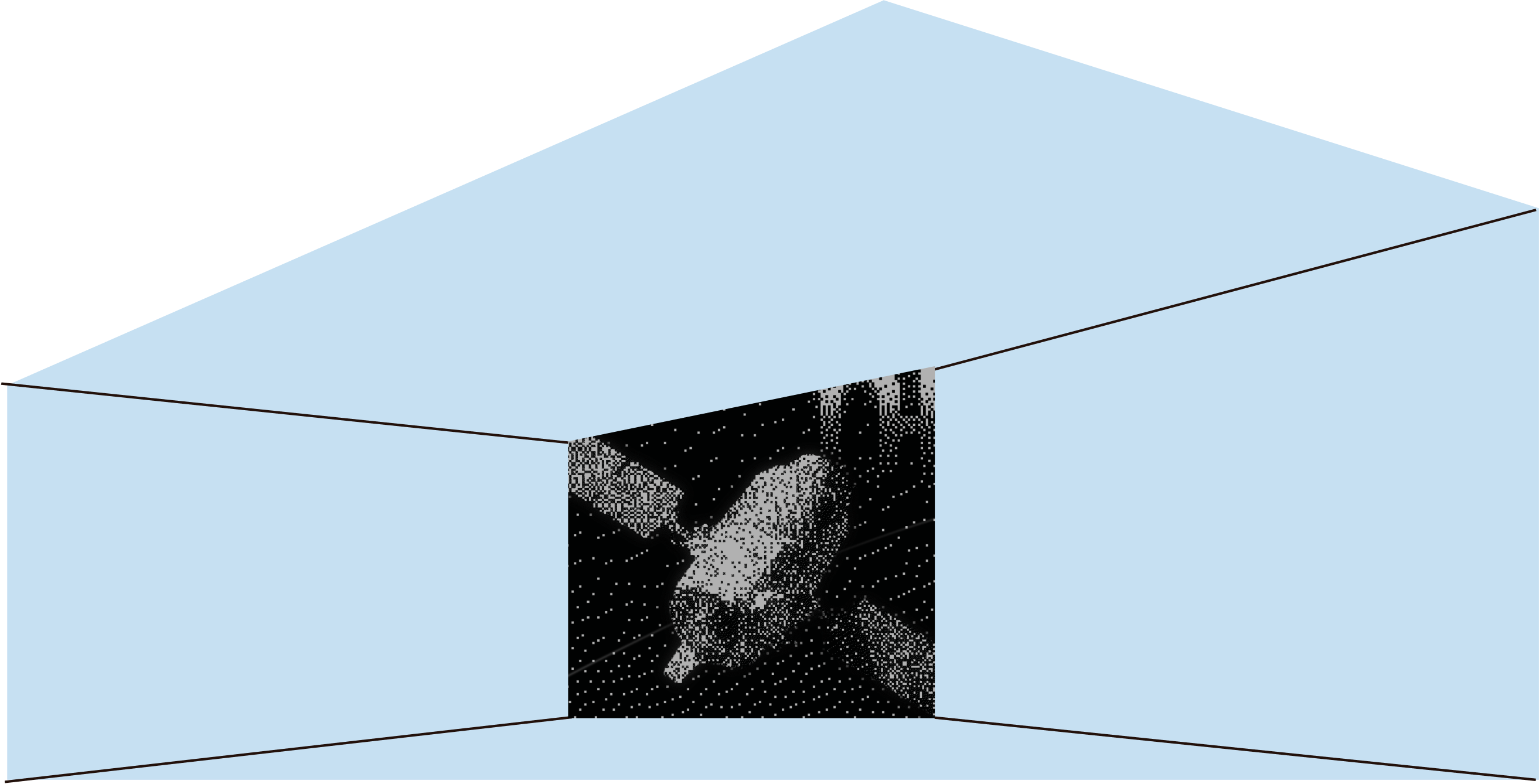
<Satellite> starts with a simple idea: “Perhaps we’re all satellites, searching for our own orbit.” Satellites are usually expected to stay in stable, fixed paths, and those that leave their orbit are often seen as failures. This work challenges that idea by comparing such satellites to people who step away from what is considered normal and create new paths for themselves. Although drifting and choosing an unfamiliar route can be risky, it can also lead to new kinds of success. Existing beyond fixed structures and expectations, <Satellite> proposes drifting not as failure, but as a way of navigating the world.

February
6th & 7th
616 E 9th St
New York, NY 10009


Soban, Window
& Satellite
Medium
CARDBOARD, MIXED MEDIA, AND POSTER
Room 4
Rose Park
Artist
Statement
Growing up between different countries and cultures, and now living across the States and Korea, the idea of “home” has always been difficult for me to define. Through short stays and repeated relocations, I began to question whether home could exist as a fixed place, which became the foundation of my art. My work reflects the experience of belonging to multiple places at once, understanding home as a state shaped by accumulated emotions and experiences. By translating this incomplete nature of home into familiar materials, I frame movement not as instability, but as a process of growth and expansion.
Description
<Soban> begins with the artist’s experience of repeated relocation and the moving boxes. These boxes, originally made for temporary use and moving, are transformed into soban—a traditional Korean dining table. In Korean culture, family is described as sikgu, meaning “those who eat together.” The dining table thus becomes a site where care, warmth, and memory are shared. By making a table out of moving boxes, the artist shows that the heart of a home can be built anywhere. Through this transformation, <Soban> reframes home not as a fixed location or permanent structure, but as something shaped through relationships and lived experience. Home, the artist shows us, can be carried, rebuilt, and redefined wherever one goes.
<Window> is a work composed of layered prints depicting landscapes from places the artist has lived. Scenes from different spaces and moments in time are stacked in multiple layers, merging into a single image through overlapping structures and shifting perspectives. This convergence reflects the processes through which the artist’s current self has been formed. The window frame placed atop the layers is not merely a structure for looking outward, but a metaphor for the way the world is perceived through accumulated experiences and memories. Through continual moving and the layering of places, <Window> suggests that spaces do not disappear as we leave them behind; instead, they gather, remain, and slowly form a way of seeing—becoming, in time, a place to call home.
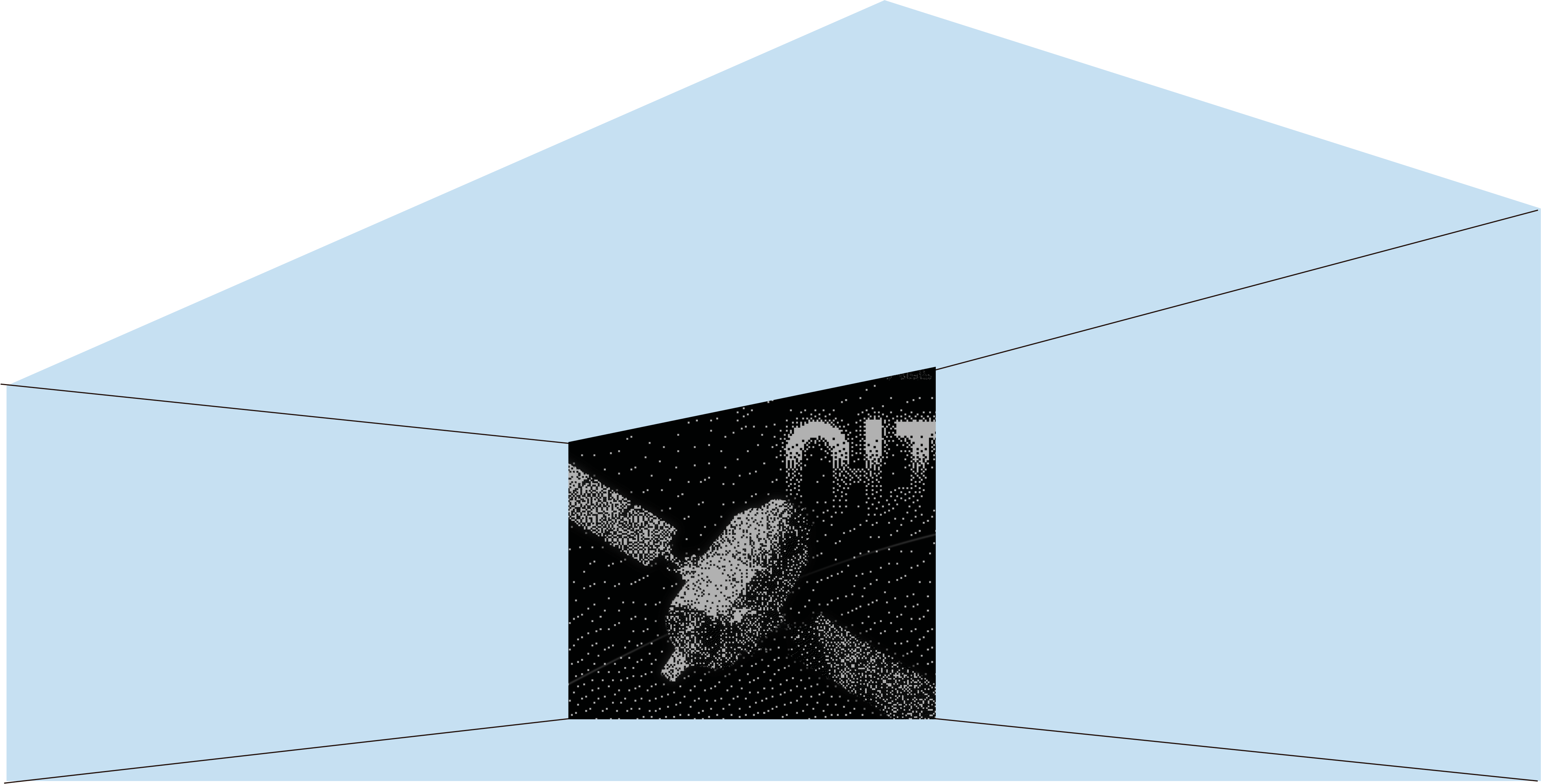
<Satellite> starts with a simple idea: “Perhaps we’re all satellites, searching for our own orbit.” Satellites are usually expected to stay in stable, fixed paths, and those that leave their orbit are often seen as failures. This work challenges that idea by comparing such satellites to people who step away from what is considered normal and create new paths for themselves. Although drifting and choosing an unfamiliar route can be risky, it can also lead to new kinds of success. Existing beyond fixed structures and expectations, <Satellite> proposes drifting not as failure, but as a way of navigating the world.

February
6th & 7th
616 E 9th St
New York, NY 10009